
Multi-Room Audio System Installation in Birmingham, Alabama
Multi-room audio is the foundation of a real whole home audio system. Music in the kitchen while you cook. Music in the master bath in the morning. Music on the patio when the sun goes down. Same song everywhere when the house is full, different music in different rooms when it isn't, all controlled from one app or one keypad on the wall. Once you've lived with it, you don't go back to a Bluetooth speaker on the kitchen counter.
The platform you build it on matters more than the speakers themselves. A great pair of in-ceiling speakers in the kitchen will sound disappointing connected to the wrong amplifier, controlled by a clunky app, sharing a network with 50 smart home devices that keep dropping the connection. A modest pair of speakers connected to the right platform — sized correctly, networked properly, integrated into the rest of your smart home — will be the system the household actually uses every day for the next 15 years.
Iron City A/V is a home audio store and audio visual equipment supplier in Birmingham. We design and install multi-room audio systems across Mountain Brook, Vestavia Hills, Crestline, Forest Park, Homewood, Hoover, Greystone, Liberty Park, and the Birmingham metro. This page covers what multi-room audio actually is, the five platforms we install most often, and how we design systems that fit different households and different homes.
What Professional Multi-Room Audio Installation Includes
Most homeowners come to multi-room audio the same way. They buy a Sonos One for the kitchen, love it, add a second one for the master bedroom, then a Sonos Move for the patio, then a Sonos Arc for the TV. Three years later they have eight Sonos products scattered through the house, none of them sized correctly for the rooms they're in, no in-ceiling speakers anywhere, the patio speaker overheating in the Birmingham summer, and the household has spent more than they would have on a properly-designed system that actually fits the house.
Professional multi-room audio installation handles what DIY misses.
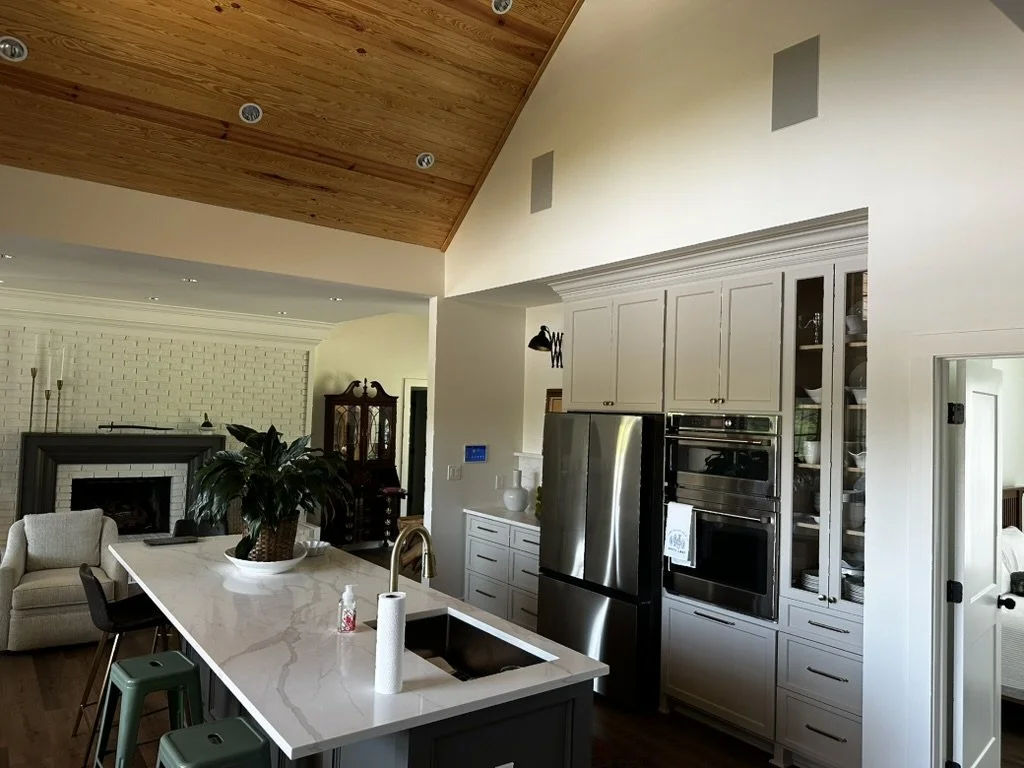
Speaker placement and room sizing. A 5-inch speaker on the kitchen counter doesn't cover a 600-square-foot great room. A pair of 8-inch in-ceiling speakers does. We size speakers to rooms, not the other way around — and we put them where they'll actually sound right (above the listening area, with proper spacing, not just where the can light cutout is convenient).
Wired backbone, not all-Wi-Fi. Wireless speakers are convenient for retrofits and small spaces. Wired speakers connected to a central amplifier are dramatically better for full-house systems. The audio quality is higher, the latency is lower, the network stays cleaner, and the speakers themselves can be smaller, prettier, and longer-lasting than their wireless equivalents. Most full-home installs we do run wired throughout, with wireless filling in only where running cable isn't practical.
Amplification sized for the speakers and zones. Most consumer audio failures come from underpowered amps trying to drive speakers they can't keep up with. We size amplification to speaker count, room volume, and how the household actually listens. A two-channel amp driving four ceiling speakers in three different rooms isn't going to sound right at any volume; the right amp for the same speakers makes the system feel effortless.
Network design. Multi-room audio is a network application. Sonos, VSSL, Bluesound, HEOS, and JukeAudio all live on the home network and depend on stable Wi-Fi or wired connections to work properly. We coordinate with the network — sometimes pulling new wired drops to amp locations, sometimes adding Wi-Fi access points to weak coverage zones, always making sure the audio system has the network resources it needs. For households doing a network upgrade alongside the audio install, see the Wi-Fi installation in Birmingham and whole home network installation in Birmingham pages.
Control and integration. A multi-room audio system that requires a separate app for the audio, a different one for lights, a third for locks, and yelling at Alexa for everything else is a system the household stops using. We integrate audio into the smart home so it responds to scenes alongside lights, locks, and shades — Goodnight kills the music, Welcome Home brings it back, Dinner shifts to the dining room playlist.
The Five Multi-Room Audio Platforms We Install
The platform decision is the single biggest decision in the project. The right platform for a household depends on how much they want to control, what other smart home systems they're running, and how much performance they're chasing. Five platforms cover almost every Birmingham household.
Sonos. The default for most households. Sonos earned its reputation honestly — the app is excellent, the hardware is reliable, the system scales from one speaker to thirty without major reconfiguration, and almost every household member already knows how to use it. Sonos works two ways for a serious whole home install. Sonos Amp drives passive in-ceiling speakers (Sonance, B&W, Origin) at 125 watts per channel — one Sonos Amp covers two zones cleanly. For larger systems we deploy multiple Sonos Amps, each handling 2-3 zones. Sonos Port and Sonos Connect:Amp are also options for integrating Sonos with existing audio equipment.
The trade-offs: Sonos is on the expensive end per zone once you scale up (each Sonos Amp covers 2 zones), the system is cloud-dependent for streaming services so internet outages affect playback, and Sonos has periodically made unilateral changes to their software that break older hardware compatibility. For most households the trade-offs are worth it. For larger homes or audiophiles, the dealer-only options below offer better economics and better performance.
VSSL. The dealer-only multi-zone amp built for the modern smart home. VSSL A.6x and A.3x are 6-zone and 3-zone amplifiers respectively, each zone capable of streaming independently from a different source — Apple Music in the kitchen, Spotify in the master bath, a vinyl turntable through the analog input in the living room, all simultaneously. VSSL's key advantage is native integration: the system shows up cleanly in Apple Home, Google Home, Control4, Crestron, and Home Assistant without middleware or workarounds. The hardware itself is rack-mount, fits cleanly in a network closet, and replaces what would otherwise be six separate Sonos Amps with one box.
VSSL is the right platform for households that want the look of zero visible audio equipment, multi-zone independence, and clean integration with a real smart home control system. The price-per-zone is significantly better than Sonos at scale — a 6-zone VSSL system typically costs less than three Sonos Amps and offers more flexibility.
JukeAudio. Another dealer-only multi-zone amp option, with a focus on retrofit installs and condos where the system needs to deliver 8 zones from a single rack-mount unit. JukeAudio's app is solid, the hardware is reliable, and the per-zone cost is competitive. JukeAudio is the right call for projects where the priority is maximum zones from a small footprint — high-rise condos, retrofits where rack space is limited, multi-tenant properties, and Airbnb-style rentals where the host wants per-room audio control without giving every room its own speaker.
Bluesound. The audiophile multi-room platform. Bluesound supports high-resolution audio (up to 24-bit/192kHz) natively across the whole system, has excellent app and integration with Roon (the audiophile streaming front-end), and partners with PSB Speakers and other premium acoustic brands. The Bluesound Powernode and Powernode Edge are the system's amplifiers, and they sound noticeably better than Sonos Amp on serious speakers. Bluesound is the right platform for households where the kitchen system is also the primary listening room — a kitchen that opens into a great room with serious B&W or Sonance speakers, where the household actually listens to music critically and not just as background.
HEOS. Denon's multi-room platform, built into nearly every Denon AV receiver and many Marantz units. HEOS is the right call when the household already has a Denon AVR running their home theater system and wants the rest of the house to integrate with it. The HEOS app handles whole-home audio, the Denon AVR handles the theater room, and everything shows up in one ecosystem. For households starting fresh, HEOS is less compelling than the alternatives — but for the customer who's already invested in Denon, it's the cleanest path.
What about other platforms? We'll install Russound, Nuvo, and other legacy systems if a customer specifically asks or if a project's existing infrastructure requires it. We don't lead with these because the modern platforms above are easier to live with and better-supported long-term. AppleTV-based audio (using AirPlay 2 to drive HomePods and AirPlay-compatible speakers) is a path some Apple-ecosystem households want; it works fine for small installs but doesn't scale to whole-home systems the way the dedicated platforms do.
How Multi-Room Audio Integrates With the Rest of the Smart Home
A multi-room audio system that lives in its own app is convenient. A multi-room audio system integrated with the rest of the smart home is part of the daily rhythm of how the house operates.
When the household leaves for the day, the Away scene includes the audio. Whatever's playing pauses, every zone shuts down, and the audio system goes to sleep until the household comes back. When the household returns, the Welcome Home scene brings the audio back — picking up where the morning left off, or starting the household's evening playlist depending on the time of day. When the household sits down to dinner, the Dinner scene shifts the audio to the dining room playlist at conversation volume, dims the kitchen lights, and pulls back the rest of the house's audio so the meal has its own focus.
These integrated scenes are what we program every day. For the lighting side of the same scenes, see the smart lighting installation in Birmingham page. For the lock side, see the smart lock installation in Birmingham page. For the parent view of the smart home, see the smart home automation in Birmingham page.
What Speakers Drive a Multi-Room Audio System
The platform handles control and amplification. The speakers handle what the household actually hears. We install three categories of speakers across most multi-room audio projects:
In-ceiling speakers for kitchens, hallways, bathrooms, master bedrooms, home offices, and anywhere ambient audio is the primary use case. In-ceiling is our most-installed category — Sonance, Bowers & Wilkins, Origin Acoustics, and Triad cover the range from value to high-end. See the ceiling speaker installation in Birmingham page.
In-wall speakers for living rooms, dens, and primary listening spaces where directional sound matters. Same brand range as in-ceiling, just oriented for forward-facing audio.
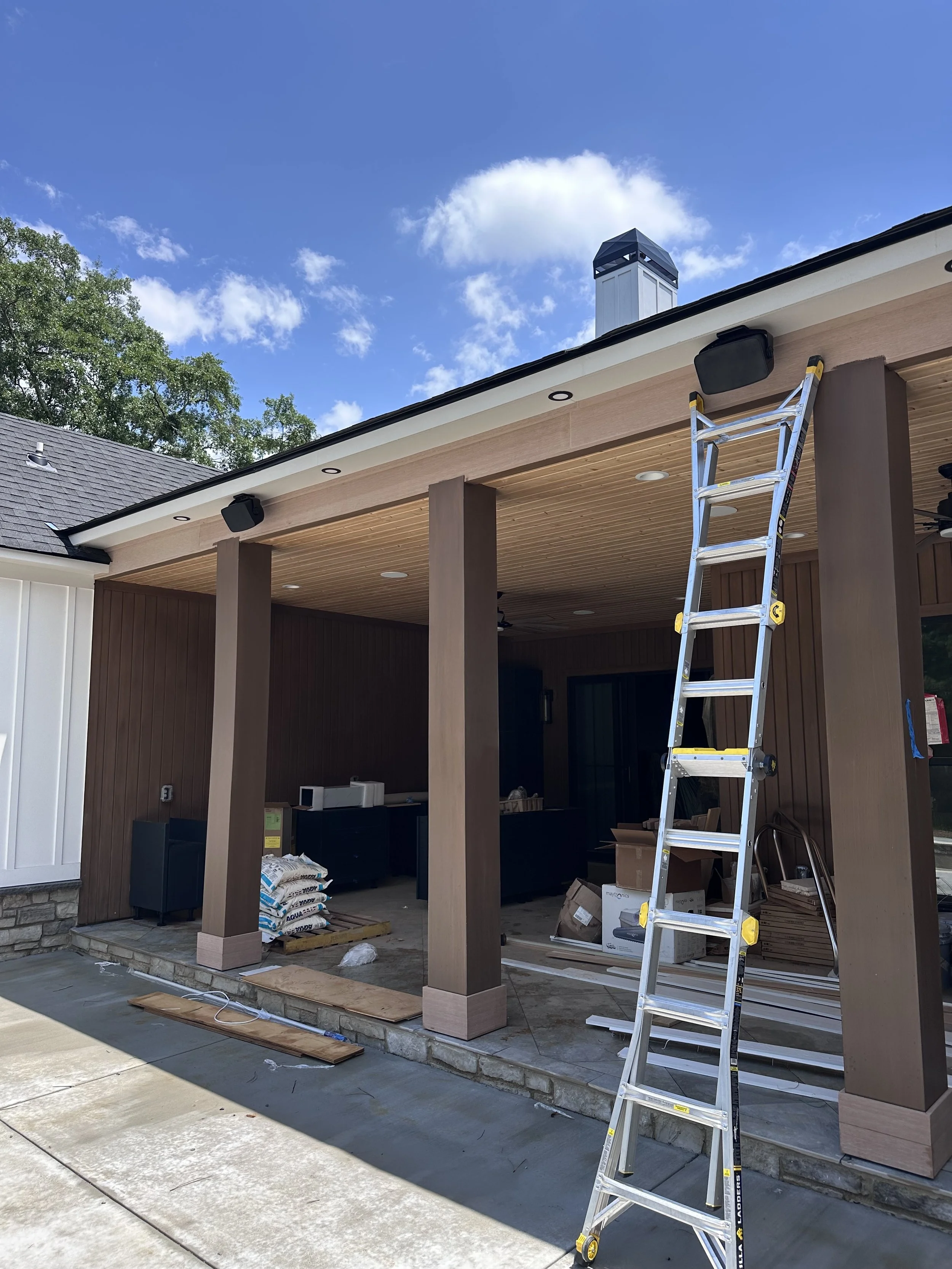
Outdoor speakers for back yards, decks, pool decks, patios, and outdoor kitchens. Three sub-categories depending on the install: visible outdoor speakers, integrated landscape audio with buried subwoofers, and covered patio installations. See the outdoor speaker installation in Birmingham, landscape speaker installation in Birmingham, and patio & pool deck audio installation in Birmingham pages for the lane each one covers.
For the parent category overview that ties all of these together, see the whole home audio in Birmingham page.
Multi-Room Audio for Different Birmingham Home Types
Different Birmingham homes call for different multi-room audio approaches.
Mountain Brook and Crestline historic homes. Older homes with plaster ceilings, narrow stud bays, and architectural features that complicate cable runs. We work around the constraints — small in-ceiling speakers (5.25" or 6.5" instead of 8") that fit between original joists, careful cable routing through attics and basements, and sometimes wireless Sonos for rooms where running cable isn't practical. The amplifier rack typically lives in a basement or utility room. A typical 4,500-square-foot Mountain Brook home gets 6-8 audio zones — kitchen, great room, master bedroom, master bath, dining room, study, and either patio or sunroom.
Greystone, Liberty Park, and new construction in Inverness. New builds let us run cable during framing and pre-position speaker locations during the trim phase. The amp rack lives in a network closet or dedicated AV closet alongside the network gear. A typical 6,500-square-foot Greystone build gets 10-15 audio zones — every common room, every bedroom, every bathroom, the patio, the pool deck, and often a pool house. VSSL or JukeAudio are the right platforms for systems this size; trying to scale Sonos to 15 zones gets expensive fast.
Homewood, Vestavia, and Hoover family homes. Mid-range homes with active families. The household typically wants 4-6 zones — kitchen, great room, master bedroom, patio, and one or two bonus rooms. Sonos covers this range cleanly with 2-3 Sonos Amps. The household can self-administer the system after we hand it over, which matters for families that don't want to call us every time they want to add a music service or rename a zone.
Forest Park and Avondale bungalows. Smaller older homes with character. Often the right answer is fewer zones (3-4) but executed well — kitchen, great room, screened porch, and a small office or den. Sonos with carefully-chosen Sonance or B&W in-ceiling speakers fits these homes perfectly. We work around the architectural constraints (plaster, smaller stud bays, no attic over part of the home) the same way we do with lighting and network installs.
Lake Martin, Smith Lake, and Gulf Coast second homes. Lake and beach houses are some of the best multi-room audio installs we do. The household wants music inside, on the screened porch, on the dock, on the boat slip, sometimes on the deck above the boathouse. Marine-grade outdoor speakers cover the wet zones; standard Sonance or B&W cover indoor spaces. Sonos works well at lake houses because the system is easy for guests to use without a tutorial. VSSL is a good fit for larger lake homes where the audio rack lives in a single closet and feeds 8-10 zones across multiple structures.
Estates with pool houses, guest houses, or detached structures. Larger projects sometimes use multiple amplifier racks — one main rack and one or more remote racks in separate buildings — connected by network or fiber. This is where VSSL especially shines, because the platform handles distributed deployments cleanly without each location requiring its own separate system.
What to Expect During Installation
A typical 6-zone multi-room audio installation runs about 2-3 days for an existing home. New construction installs run alongside the rest of the build schedule, with rough-in (cable pulls) during framing and trim (speaker mounting and amp connection) during the finish phase. Larger 10+ zone systems for estate homes typically run a full week.
We start with a design walk. We look at the floor plan, identify which rooms get audio, where the speakers will mount, where the amp rack will live, and how the cable runs back to the rack. We talk through how the household actually uses music — whole-house party mode, room-by-room independence, integration with home theater, integration with the rest of the smart home. The design walk is also when we pick the platform and the speakers based on the household's goals and budget.
Cable runs come next. Most installs use 16-gauge or 14-gauge in-wall speaker wire (CL3-rated for inside walls), pulled through the attic and dropped into walls and ceilings to speaker locations. The rack location gets its own dedicated network drop and dedicated power. For larger systems we sometimes pull conduit instead of just wire, leaving room for future upgrades.
Speaker installation follows. We cut the in-ceiling holes precisely (no jagged drywall, no oversized cuts), mount the speakers cleanly with the brackets that came with them, and verify that each speaker is wired correctly and tested. In-wall speakers get the same treatment, with extra attention to acoustic isolation between adjacent rooms.
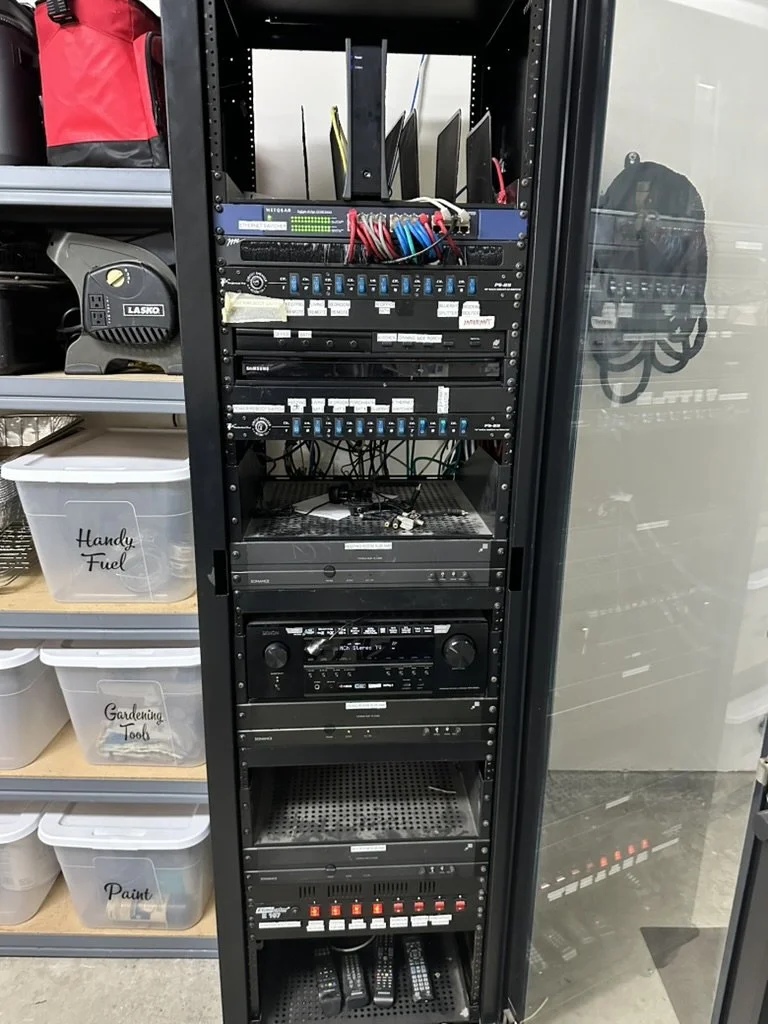
Amplifier and platform setup is where the system comes to life. We rack-mount the amps, terminate every speaker run to the patch panel and then to the amp, label every wire, and set up the platform's app and network configuration. Each zone gets named (Kitchen, Great Room, Master Bath, Patio) and tested independently. We integrate with the rest of the smart home if other systems exist.
We hand off with a 30-minute walkthrough — how the app works, how to add and rename zones, how to integrate with streaming services, how to use the wall keypads if the system has them. The household gets the documentation and the warranty information for every component.
Frequently Asked Questions About Multi-Room Audio
Can I expand the system later?
Yes. All five platforms we install scale up cleanly — adding zones means adding amp channels (Sonos = additional Sonos Amps; VSSL = expansion modules; JukeAudio = additional zones; Bluesound = additional Powernodes; HEOS = additional Denon endpoints). We typically design systems with 25-30% spare capacity so the first expansion doesn't require replacing the rack.
Can I use my existing speakers?
Often yes. If you already have decent in-ceiling or in-wall speakers, we can connect them to a new platform's amplifier and they'll keep working. We test existing speakers during the site walk and tell you whether they're worth keeping or whether replacing them will substantially improve the system. We're honest about this either way — sometimes the right answer is keeping what you have, sometimes it's replacing.
What about voice control?
Most platforms support voice control through Alexa, Google Assistant, or Apple's Siri (depending on the platform and ecosystem). Voice works well for simple commands ("play jazz in the kitchen") and less well for complex ones ("play the playlist I was listening to yesterday at this volume in only the master bedroom"). We treat voice as a secondary control layer; the primary controls are the app and physical wall keypads where they make sense.
How much does professional multi-room audio installation cost in Birmingham?
A small system — 3 zones (kitchen, master bedroom, patio), in-ceiling speakers, Sonos platform, basic configuration — typically runs $4,500 to $8,500 installed. A mid-range whole-home system for a 4,000-5,000 square foot home with 6 zones, professional in-ceiling speakers, and full smart home integration typically runs $12,000 to $25,000. Estate projects with 10-15 zones, premium speakers (B&W, Triad), and integration with Control4 or similar can run $35,000 to $75,000+. We give a fixed quote after the site walk.
Will the audio keep working if my Wi-Fi goes down?
Mostly yes. Wired multi-room audio (VSSL, JukeAudio, Sonos with Ethernet backbone, Bluesound with Ethernet) keeps playing local sources — already-cached music, Bluetooth from a phone, an analog input from a turntable or AVR — even when Wi-Fi is out. What stops working is streaming services that depend on the internet (Spotify, Apple Music, Tidal, Pandora). When the internet comes back, streaming resumes automatically.
Can I integrate my home theater system?
Yes. Most projects connect the home theater receiver to the multi-room audio system so the theater room appears as one of the zones. When the household watches a movie, the theater room runs independently. When they aren't, the theater room becomes another music zone. Sonos (via Sonos Port or Sonos Connect:Amp), VSSL (analog input), Bluesound (analog input), and HEOS (native, since both are Denon) all handle this cleanly.
Working With a Local Home Audio Store in Birmingham
Multi-room audio is a long-term investment in how the household lives in the home. As a home audio store and audio visual equipment supplier in Birmingham, Iron City A/V designs systems that fit how customers actually use music — daily background, weekend dinner parties, holiday gatherings, quiet evenings — and we stand behind the work for the long term. Every speaker we mount and every zone we configure is part of the larger picture.
Iron City A/V 1 Perimeter Park S Suite 100 N, Birmingham, AL 35243 (205) 577-3124
Same team on your project from start to finish. No subcontracted labor, no call center routing, no surprises.