
Surround Sound Installation in Birmingham, Alabama
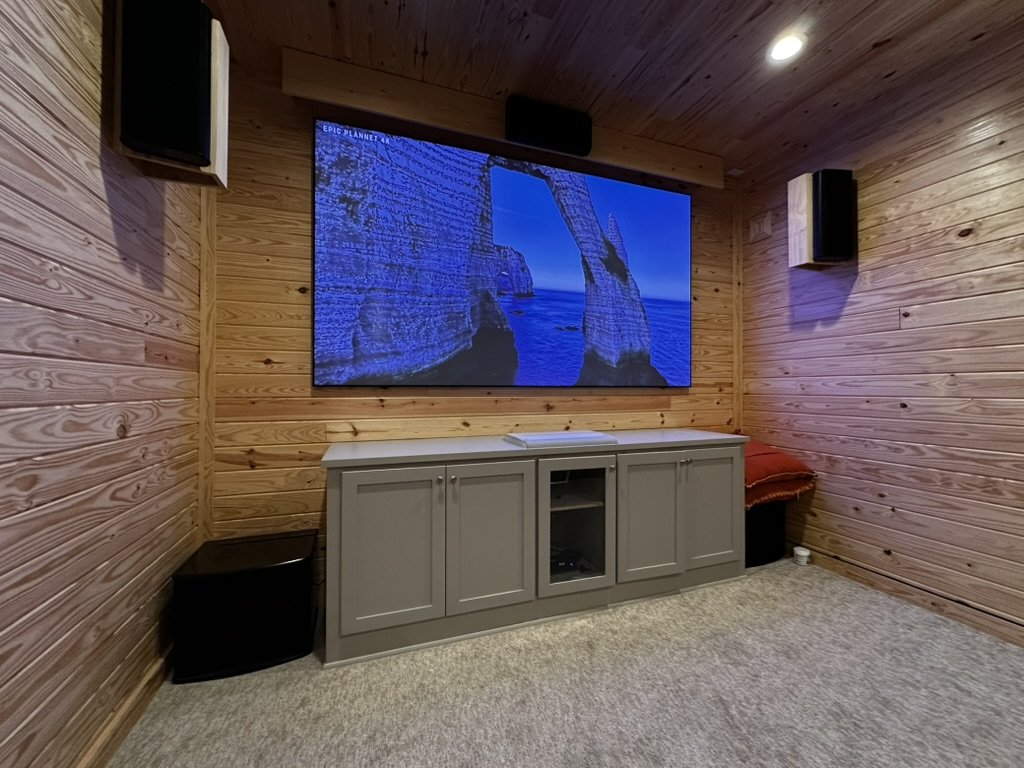
Most TVs in Birmingham homes are paired with terrible sound. A $4,000 OLED with the speakers built into the bezel pointed at the wall behind it. A soundbar that promises virtual surround and delivers stereo. A 5.1 system someone bought at Best Buy 12 years ago with the rear speakers pushed into a corner because nobody ever ran the wire. The picture is incredible. The sound is an afterthought.
Real surround sound is the single biggest upgrade most homeowners can make to a media room or family room without rebuilding the room. Dolby Atmos object-based audio, in-wall or in-ceiling speakers placed where Dolby actually wants them, dual subwoofers calibrated for the seats, and a processor that ties it all together — installed in 1 to 3 days into a room you already have.
Iron City A/V is a home theater store and audio visual consultant in Birmingham. We install surround sound systems across Mountain Brook, Vestavia Hills, Homewood, Hoover, Greystone, Liberty Park, and the Birmingham metro. This page covers what surround sound installation actually includes, what configuration fits your room, what it costs, and what to expect.
What Surround Sound Installation Actually Includes
A complete surround sound install isn't just hanging speakers. It's seven steps that have to come together in order:
Room analysis — measuring the room, identifying acoustic problems, mapping seat positions, and figuring out what configuration the room can support
Speaker selection matched to the room size, listening style, and budget
AVR or processor selection with the right channel count, power, and HDMI 2.1 capability
Speaker placement and mounting — in-wall, in-ceiling, on-wall, or on stands, located precisely where Dolby's spec calls for them
Cable runs for speaker wire, HDMI sources, network for control, and dedicated electrical for high-current setups
Source integration so streaming, Blu-ray, and gaming all output Atmos correctly
Calibration with a meter — not the AVR's auto-setup mic, an actual calibrated measurement microphone running Audyssey, Dirac Live, or Trinnov room correction
Most installers in Birmingham handle steps 4 and 5 and call it a day. The other five are what separate a real surround sound install from a glorified speaker mounting job.
Surround Sound Configurations and What They Mean
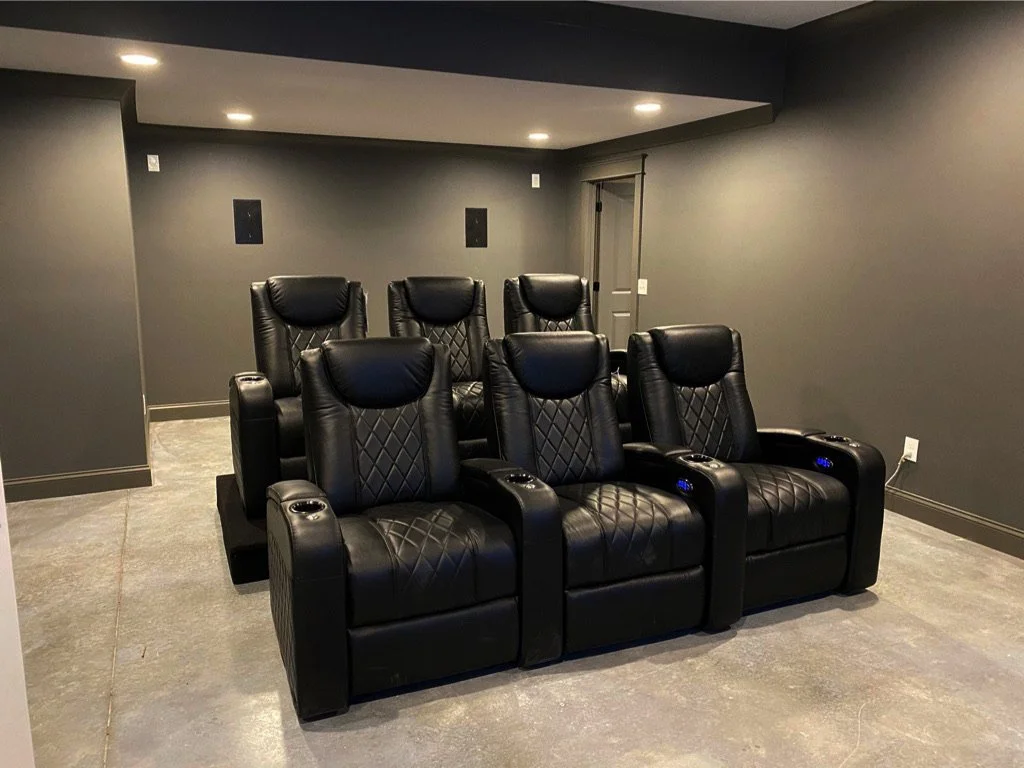
Customers shopping for surround sound run into a wall of numbers — 5.1, 5.1.2, 7.1.4, 9.2.4 — without much explanation of what they actually mean. Here's the practical breakdown:
5.1 (five speakers + one subwoofer). The entry point. Front left, center, front right, two surrounds behind the seating, and a sub. Right answer for smaller media rooms, family rooms with limited speaker placement options, and customers who want a real upgrade from a soundbar without going all-in. Works great for movies, sports, and gaming.
5.1.2 (five speakers + sub + two ceiling Atmos speakers). The minimum Dolby Atmos configuration. Adds two height speakers in the ceiling for the object-based audio that makes Atmos worth it — rain falling overhead, helicopters flying past, ambient sound that locates above you. The smallest jump that gets you real Atmos.
7.1 or 7.1.2. Adds two rear back speakers (behind the back row of seating). Right answer for longer rooms where the surrounds and the back wall are too far apart for a 5.1 system to fill in properly.
7.1.4 (seven speakers + sub + four ceiling speakers). The reference-class Atmos configuration for most home cinemas and serious media rooms. Two pairs of ceiling speakers — one pair in front of the seats, one pair behind — for full Atmos object placement overhead. This is what most serious Birmingham builds end up at.
9.2.4 and 11.2.4. Adds wide-front speakers (between the mains and the surrounds) and a second subwoofer. Reserved for larger rooms (200+ square feet) and cinema-quality builds. Diminishing returns for most family rooms.
The right configuration is whatever fits your room, your budget, and how you actually use the space — not whichever number is biggest. We measure during the consultation and tell you what makes sense.
Speaker Types — What Goes Where
Three speaker form factors cover almost every Birmingham install:
In-wall and in-ceiling speakers. The clean install — speakers disappear into the architecture and the room looks like a normal room until the movie starts. Right answer for most media rooms, family rooms, and any space where a homeowner doesn't want speaker boxes visible. Sonance, KEF Ci Series, Klipsch, Triad, and Bowers & Wilkins CT Series are the brands we install most. In-wall installs in older Mountain Brook and Crestline homes with plaster walls take more time than newer drywall homes — we plan for it.
Tower and bookshelf speakers. Visible speakers on the floor or on stands. Better for the audiophile who wants a specific brand of speaker and is happy to see them, or for living rooms where music listening matters as much as movies. Brands we carry include Klipsch, KEF, Focal, Bowers & Wilkins, Definitive Technology, and Paradigm.
Hybrid configurations. Front towers visible, surrounds hidden in the ceiling, subwoofers tucked behind furniture. The most common compromise in real Birmingham homes — gives you the audio quality of visible speakers up front without filling the room with speaker boxes.
For ceiling Atmos heights specifically, we install dedicated overhead speakers — not "Atmos-enabled" speakers that fire upward and bounce off the ceiling. Bounced Atmos is a workaround for renters and customers who can't run wire. For any new install with the option to put a speaker in the ceiling, dedicated heights win every time.
Subwoofers — Why One Is Almost Always Wrong
Most surround systems in Birmingham ship with one subwoofer, and most rooms sound worse for it. A single sub creates "nodes" — spots in the room where the bass is too loud and other spots where it's missing entirely. Move three feet on the sectional and the bass disappears.
Two subwoofers, placed correctly, smooth out the bass response across the entire seating area. Four subwoofers — common in dedicated cinemas — make the bass nearly identical at every seat. We design with two subs minimum on any serious install. Brands we carry include SVS, REL, JL Audio, Klipsch, and Bowers & Wilkins.
AVRs and Processors Where the System Actually Lives
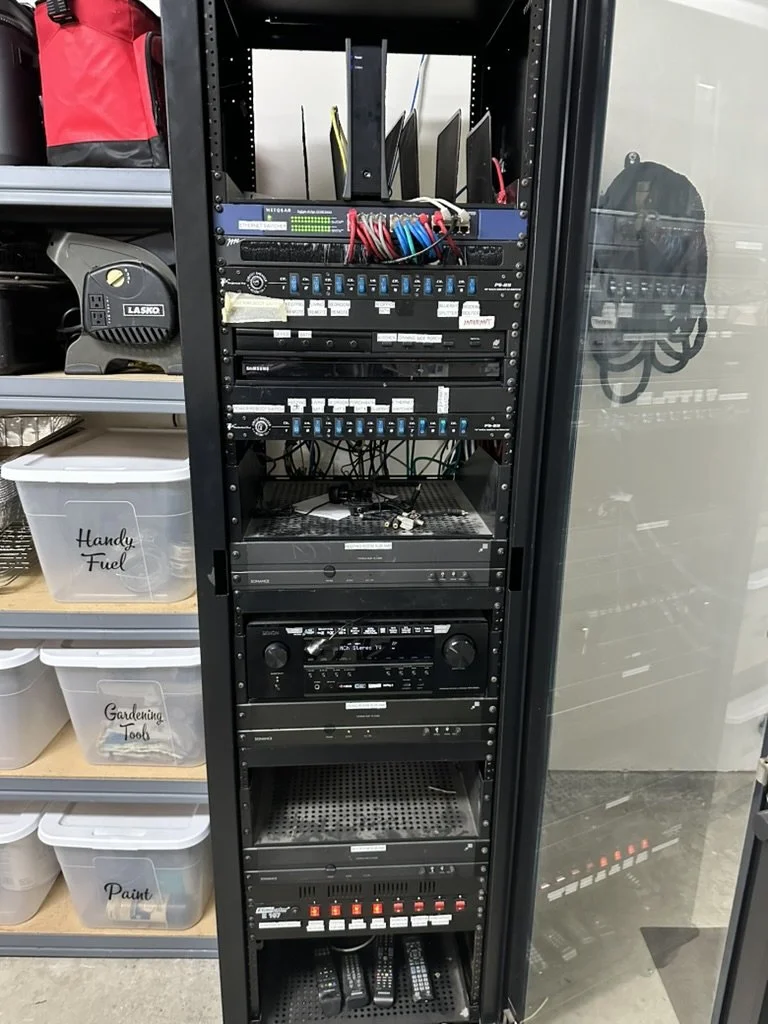
The AVR or processor is the brain of the surround system. Three real tiers cover almost every Birmingham install:
AVRs from Denon, Marantz, Yamaha, and Anthem. Right answer for 5.1, 5.1.2, 7.1, and 7.1.4 systems. Denon X3800H and X4800H, Marantz Cinema 50 and Cinema 40, Yamaha RX-A8A, and Anthem MRX series cover the range from mid-tier to high-tier without crossing into separates.
Higher-tier AVRs and entry separates. Marantz AV10, Anthem AVM-90. The bridge between AVR convenience and separates-level performance.
Reference-class processors. Trinnov Altitude and Storm Audio ISP for the high-end builds where the customer wants the best room correction available and isn't constrained by budget. Most Birmingham clients don't need this tier — but for the ones who do, this is where the audio quality lives.
Where Surround Sound Goes in Birmingham Homes
Five room types account for almost every surround install we do:
Family rooms. The most common Birmingham surround install. Existing TV, existing seating, existing room — we add architectural speakers in-wall and in-ceiling, hide the AVR in a built-in or closet, and the room looks the same with infinitely better sound. Mountain Brook, Vestavia, Homewood, Hoover, and Cahaba Heights family rooms account for the bulk of this work.
Bonus rooms over garages. Common in Greystone, Liberty Park, Inverness, Trussville, and Chelsea new construction. Rectangular layout, semi-isolated location, and ceilings that accept ceiling Atmos speakers easily. Often paired with an upgrade from soundbar to full 7.1.4.
Finished basements. Below-grade rooms work great for surround — naturally quieter and easier to control acoustically than upstairs spaces. Common in older Mountain Brook, Bluff Park, and Hoover homes with full basements.
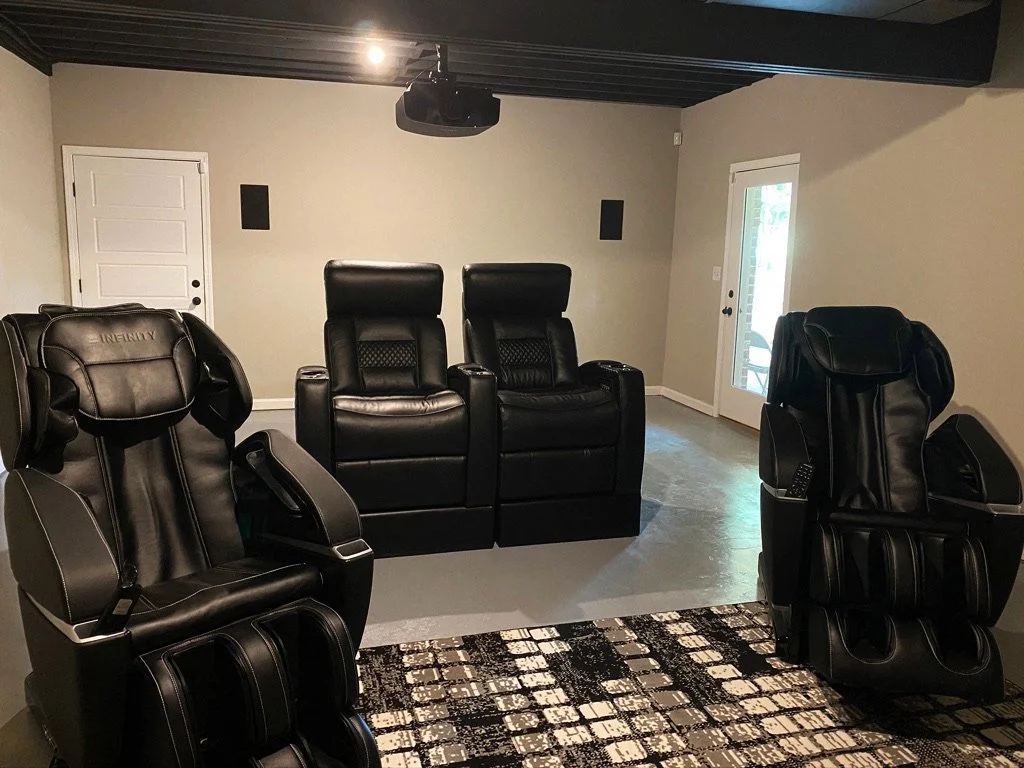
Dedicated home cinemas. Surround sound is part of every cinema build — covered in detail on our home cinema installation page. Most cinema builds are 7.1.4 or larger.
Master bedrooms. Smaller systems, usually 5.1 or 5.1.2, often in-ceiling only with a hidden AVR. Less common but a growing service for homeowners who want a real audio experience in the room they actually watch TV in.
What to Expect From the Process
A typical surround sound install in Birmingham runs four steps:
Consultation. We come to the house, measure the room, listen to what you've got, and talk through what configuration fits your space and budget. About an hour.
Design and proposal. Within a week, you get a written proposal with the speaker selection, AVR or processor, mounting plan, cable plan, and a fixed install price. No mystery line items.
Install. Most surround installs run 1 to 3 days onsite. In-wall and in-ceiling speaker mounting, cable runs, AVR placement, and source integration. Plaster wall installs in older Birmingham homes can add a half-day for backing and patching.
Calibration and walkthrough. Half-day onsite measuring the room with a calibrated mic, running Audyssey or Dirac Live or Trinnov room correction depending on the processor, and dialing in subwoofer levels. Then we show you how it works.
Most full surround installs take 1 to 3 weeks from signed contract to completion.
What Surround Sound Installation Costs in Birmingham
Real ranges, equipment plus install:
Entry surround install: $3,500 to $8,000. 5.1 or 5.1.2 in-wall and in-ceiling speakers, mid-range Denon or Marantz AVR, single quality subwoofer, calibration. Right call for most family rooms.
Mid-tier surround install: $8,000 to $25,000. 7.1.4 architectural speaker system, premium AVR (Marantz Cinema 50/40, Anthem MRX), dual subwoofers, full calibration with measurement mic, and integration with existing video and control systems.
High-end surround install: $25,000 to $75,000+. 7.1.4 or larger, premium speakers (KEF Reference, B&W 800 Series, Focal, or full Triad reference), Trinnov or Storm Audio processor, four subwoofers, complete calibration, and tight integration with existing home theater or smart home control.
These numbers cover the speakers, the AVR or processor, the subwoofers, the cabling, the install, and the calibration. They don't cover building soffits, modifying ceilings to accept in-ceiling speakers in plaster homes, or running new electrical circuits — which are sometimes needed in older Birmingham homes.
FAQs About Surround Sound Installation in Birmingham
Do I need Dolby Atmos, or is 5.1 enough?
Depends on how you use the room. For sports, news, and most TV, 5.1 sounds great and there's no Atmos content involved. For movies — especially modern movies on streaming or 4K Blu-ray — Atmos is a real upgrade and most customers who hear it side-by-side want it. The minimum Atmos system is 5.1.2, which adds two ceiling speakers to a standard 5.1 layout. Modest cost increase, real audio improvement.
Can surround sound work in my open floor plan?
Yes, with realistic expectations. Open floor plans are harder to dial in than enclosed rooms because the sound has nowhere to bounce off. We use larger speakers, more subwoofer power, and more aggressive room correction in open floor plans. The result is great — but it's not the same controlled experience as an enclosed room.
Can I add surround sound to my existing TV setup?
Almost always yes. Most surround installs in Birmingham are retrofits to existing rooms. If you have a TV, an outlet, and at least some access to wall and ceiling cavities, we can run wire and install speakers without rebuilding the room.
What's the difference between Audyssey, Dirac Live, and Trinnov?
All three are room correction systems that measure your specific room and correct the audio for it. Audyssey is built into most mid-tier Denon and Marantz AVRs and works well. Dirac Live is the upgrade — more aggressive correction, more measurement points, available as a paid upgrade on higher-end AVRs and standard on most separates processors. Trinnov is reference-class, available only on Trinnov Altitude processors, and is the gold standard. The right answer depends on the room and the budget.
How many subwoofers do I really need?
Two minimum for most rooms — single subwoofers create dead spots and loud spots that ruin the bass experience. Four is the right answer for dedicated cinemas. One is the answer for very small rooms or budget-constrained installs.
Will surround sound speakers damage my plaster walls?
Older Mountain Brook, Crestline, and Forest Park homes often have plaster walls instead of drywall, which complicates in-wall speaker installation. We handle plaster carefully, add backing where needed, and cut openings cleanly. There's some patching work in most plaster installs, but no damage that can't be repaired. We'll tell you up front if your home is going to need extra plaster work.
Working With a Local Birmingham Home Theater Store
Iron City A/V is a home theater store, audio visual consultant, and audio visual equipment supplier in Birmingham. We carry the speakers, AVRs, and processors, we design the system, and we install and calibrate it — same company from first phone call to final tuning. Local, responsive, accountable.
If you're planning a surround sound install in Birmingham, the consultation is free and we'll tell you the right configuration for your room, not the most expensive one we can sell.
Iron City A/V 1 Perimeter Park S Suite 100 N, Birmingham, AL 35243 (205) 577-3124